
 CLOSE
CLOSE
At one of the nation’s largest correctional and detention complexes, successful daily operations require more than scale. They require knowing people.
CoreCivic’s Central Arizona Florence Correctional Complex (CAFCC) in Florence, Arizona, serves a diverse population for federal, state and local government partners. The complexity of that work makes communication, specialization and strong leadership essential.
For Warden Luis Rosa Jr., that starts with developing staff.
“Everything starts on day one,” Rosa said.
New officers begin with a seven-week training academy, but Rosa sees those first weeks as an introduction. Once employees step into their roles, other strengths emerge. An unrelated background becomes useful. An outside interest points to another department. A skill begins to look like a career path.
Rosa recently met a new officer who had worked as a mechanic. When a fleet maintenance position opened, he saw the connection: someone who understood engines and equipment and was learning the demands of a correctional environment.
The same opportunity exists for officers pursuing nursing degrees. Once credentialed, they can bring clinical skills to a health care role, along with an understanding of correctional operations, security protocols and patient care.
Employee development becomes reciprocal. Employees turn skills and interests into career paths, while CAFCC develops professionals who understand the operation from multiple perspectives. In CoreCivic facilities, talent is recognized, cultivated and connected to more opportunities.
“You may start here and transition to Eloy or Saguaro,” Rosa said. “We all talk, and we all do succession plans.”
That focus is especially important at a facility of CAFCC’s size and complexity. Its unit management structure creates subject matter experts for different populations and functions, while daily huddles keep teams connected and informed.
That same philosophy extends to the individuals in CAFCC’s care.
At CAFCC, transition services are central to its mission in addition to providing recreational opportunities, pre-GED education, behavioral counseling services and tablet-based Go Further programming to help them build skills they can carry with them.
Offering individuals opportunities like these and providing comprehensive care has earned CAFCC national recognition. In 2018, it received the R. Scott Chavez Facility of the Year Award from the National Commission on Correctional Health Care, selected from nearly 500 accredited correctional institutions.
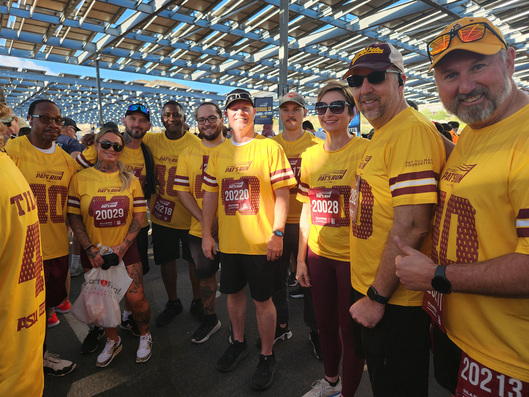
CAFCC’s impact also reaches beyond its walls. Employees participate in blood and clothing drives, highway cleanups, youth sports sponsorships, veterans' initiatives and projects supporting local first responders.
The scale and success of CAFCC can be seen in the coordination across security, health care, transportation and support. The work, however, is measured differently. From employees finding career paths, residents building life skills, and individuals becoming better prepared for what comes next, success looks different for everyone. At one of the nation’s largest correctional and detention complexes, progress is built one person at a time.


